Transportation industry professionals may refer to "freight brokerage" as a catchall term, but freight brokers actually come in several forms, from traditional and agent-based models to asset-backed and digital platforms.
While all are freight brokers, each serves shippers differently, depending on the model's resources, technology, and service flexibility. So how can you know which freight brokerage type is right for your business's unique needs?
At ATS Logistics, we’ve been assisting customers as a traditional freight brokerage since 1989. Our model has proven successful for decades — but that’s not to say other kinds of brokers won’t meet your needs.
In this blog, we’ll provide freight broker type definitions for the most common models, best use cases for each, a direct comparison chart, and our expert advice on how to choose the right freight broker for your business. Let's get started!
Key Takeaways
- Different freight broker models include traditional, agent-based, asset-based, digital, and 3PLs.
- Each freight brokerage model offers different levels of service and flexibility.
- Some brokers focus on relationships, others on speed and automation.
- To determine the best freight broker type for your business, match your freight needs and service preferences to the brokerage's strengths.
What Is a Freight Broker?
A freight broker connects shippers that need freight moved with carriers that have available capacity to move it. Brokers coordinate loads, manage logistics details, and ensure freight gets from Point A to Point B efficiently.
Crucially, though, freight brokerages typically don't own trucks or hire drivers. A freight broker's value lies in their ability to secure reliable capacity at competitive rates, often leveraging a wide network of diverse carriers to provide shippers a greater degree of flexibility.
Freight brokers are especially useful when market conditions are tight, or when shippers need options or scalability across different freight modes and regions.
The Five Main Types of Freight Brokers
There are five main types of freight brokerage models in the transportation marketplace:
- Traditional
- Agent model
- Asset-based
- Digital
- Third-party logistics providers (3PLs)
All broker freight to carriers on behalf of shippers, but each goes about the process in a slightly different way.
Traditional Freight Brokers
Traditional freight brokers operate with internal teams — sales representatives and carrier representatives — that directly manage customer and carrier relationships. These teams negotiate rates, track shipments, and provide personal communication throughout the shipping process.
These teams are also fully employed by the brokerage and are paid a salary, often with additional incentives such as commissions, bonuses, and benefits.
Pros
- Strong service incentives
- Established carrier relationships
- Broad service offerings
- Infrastructure to absorb market fluctuations
Cons
- Less personalized attention at scale
- May not offer single point of contact
- Customer experience can vary
- No owned assets
Best for: Shippers that value personal service and long-term relationships with a brokerage team.
Agent Model Freight Brokers
Agent model freight brokers use contract workers (agents) to broker freight for their customers under a brand's brokerage license. Because they are contractors, these agents are not paid a salary, earn money solely on commission, and do not receive benefits.
However, because their pay is directly and exclusively tied to the freight they book, these individuals are highly motivated to provide an exemplary level of customer service, and to learn everything there is to know about their customers' freight needs. Some freight agents specialize in specific regions or freight types, further deepening their expertise.
Freight agents manage every aspect of a shipment from the moment a customer books a load with them. This includes:
- Quoting the freight
- Booking the load
- Finding a carrier
- Scheduling pickup and delivery timeframes
- Tracking the freight and monitoring its progress
The agent model typically provides strong local expertise and flexibility without the cost structure of larger corporate offices.
Pros
- Incentivized to build personal, long-term customer relationships
- Strong focus on understanding customer processes, goals, and needs
- Service-first approach
- Deeper carrier insight
- Better freight matching
Cons
- Limited resources and infrastructure
- Less financial backing
- An overwhelming workload can be prohibitive to customer service
- No owned assets
Best for: Shippers that prefer to work one-on-one with an agent, need coverage in niche areas, or have one-off or spot freight needs.
Asset-Based Freight Brokers
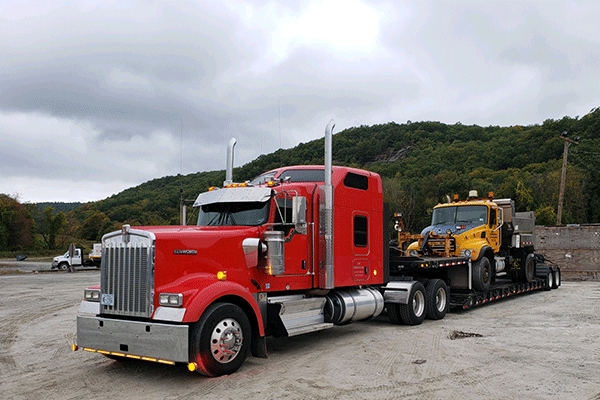
An asset-based freight broker, also called asset carriers with brokerage authority, own trucks, trailers, or other transportation assets that they use to haul freight for their customers, in addition to brokering freight to third-party carriers.
Because they maintain their own fleet as well as an external carrier network, asset-based freight brokers can reliably find capacity for their customers, especially when the market gets tight.
Pros
- Access to owned assets
- Greater control over capacity
- More reliable coverage
Cons
- Asset-first freight assignment = freight may not be matched with true best fit carrier
- Potential for higher costs
Best for: Shippers that want the dependability of an asset carrier but the flexibility of a broker's network.
Digital Freight Brokers
Digital freight brokers rely on online platforms, tools, and automations to match loads with carriers and drivers in real time.
They provide instant quotes, visibility tools, and streamlined documentation for ultimate convenience. Most digital freight brokers focus primarily on dry van and flatbed freight, as these are the most "standard" trailer types.
Digital freight brokers use algorithms to find the best possible rate for their customers' freight. Often there are few, if any, human logistics experts involved in the process; freight is quoted, booked, and hauled in a purely transactional manner.
With few employees necessary to operate, digital freight brokerages tend to have low overhead costs, which enables them to offer some of the lowest rates on the market. They're also more likely to be able to absorb short-term losses, allowing them to follow through on quoted prices.
Pros
- Fast rate generation
- Highly efficient
- Competitive pricing
Cons
- No shipper-broker relationship
- Minimal customer service
- Narrow service offerings
- Limited support for specialized freight
Best for: Shippers that value speed and convenience over person-to-person customer service.
Third-Party Logistics (3PL) Providers
A third-party logistics (3PL) company offers outsourced logistics services for businesses, essentially becoming an extension of their in-house team. While other forms of brokerage work exclusively to connect customers with truck capacity, 3PLs take on a more comprehensive role.
These companies handle all transportation and logistics services for their customers, including freight shipping, warehousing and storage, inventory management and distribution, rollout, reverse logistics, and supply chain fulfillment.
3PLs can be asset-based, non-asset-based, or hybrid models:
- Asset-based 3PLs own assets, like trucks and warehouses, for an even greater level of control.
- Non-asset-based 3PLs function more like a traditional brokerage, using a network of trusted providers to haul and store freight.
- Hybrid 3PLs use a mix of both owned assets and a provider network to balance stability, cost savings, and scalability for customers.
By leveraging technology in the form of various transportation, warehouse, and inventory management systems, 3PLs can provide 360 degrees of service at the highest possible. This allows companies to focus on their core operations rather than managing logistics.
Pros
- Greatly reduced operational burden
- Time and resource savings
- All-in-one convenience
Cons
- Less direct oversight
- Less pricing transparency
- Increased reliance on third parties
Best for: Shippers with complex shipping needs looking to fully outsource transportation and logistics management burdens to better focus on core business priorities.
Freight Broker Model Comparison Chart
| Model | Key Advantages | Ideal For |
| Traditional | Personalized service, relationship-driven | High level of customer service, single point of contact |
| Agent-Based | Relationship-driven, flexibility | Multi-region coverage and niche expertise |
| Asset-Based | Greater control and reliability | Dependable coverage, flexibility |
| Digital | Speed, convenience, lower rates | Real-time capacity, self-service freight booking |
| 3PL | Extension of your business, comprehensive services | High volumes/frequency, complex shipping needs |
How to Choose the Right Freight Broker for Your Business
When it comes to choosing the right freight broker for your business, knowing what options are out there is only part of the equation.
Knowing what your business needs and wants out of a provider is also key. Without understanding your company's shipping supply chain — including the problems or inefficiencies you may be trying to solve — it will be difficult to match up your needs with a broker's strengths.
It's important to sit down and quantify your company's key shipping needs before you go sourcing and vetting brokers. Make sure you know your company's:
- Shipping volume
- Lane consistency
- Mode/equipment type needs
- Desired level of service
- Any special requirements for your freight
Likewise, no two brokers are exactly the same. Even two companies of the same type may excel in different areas. In addition to looking for brokers that can meet the basics of your shipping needs, look for providers that offer:
- A high level of carrier vetting
- Proven reliability and safety
- Transparent pricing and communication
- Strong technology for tracking and updates
- The ability to scale with your shipping needs
No single approach fits every shipper. The right brokerage — and the right service model — will provide the right balance of cost, customer service, reliability, and visibility according to your priorities.
Next Steps: Selecting a Freight Broker That Works for You
Freight brokerage is not a one-size-fits-all solution. The key to choosing the right freight broker isn’t identifying the “best” model overall, but rather the model that best aligns with your business’s priorities.
Each freight broker type offers distinct advantages depending on your shipping volume, freight complexity, service expectations, and tolerance for risk. Some excel at relationship-driven service, others at speed and efficiency, and still others at providing comprehensive, end-to-end logistics support.
By clearly defining your shipping needs, understanding your options within the freight brokerage landscape, and evaluating brokers on reliability, transparency, technology, and scalability, you can find a broker that will strengthen your supply chain, not complicate it.
To help you find your best-fit broker, we've created a free Freight Brokerage Selection Checklist. This downloadable tool provides clear next steps for vetting brokerages and aligning your needs with their capabilities.